Watching the World Cup Can Double Your Heart Attack Risk: What the Research Says and What Your CI Policy Requires
A NEJM study found watching a stressful World Cup match more than doubles the risk of acute cardiovascular events. Here is how that connects to your CI policy's heart attack definition.
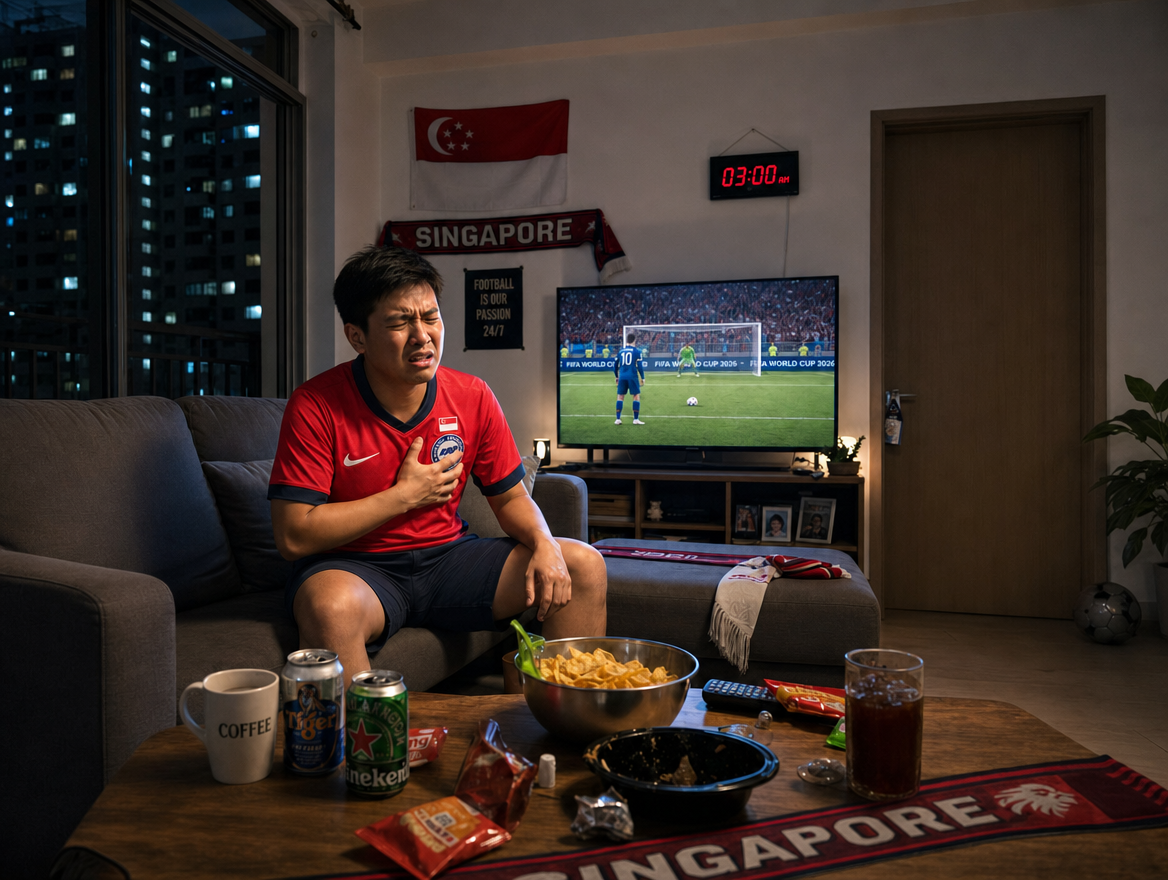
TL;DR — What to Check
- Watching a stressful World Cup match more than doubles the risk of acute cardiovascular events — according to a landmark study published in the New England Journal of Medicine, based on 4,279 patients during the 2006 World Cup in Germany.
- It is not winning or losing that triggers cardiac events — it is the intensity of the match — the NEJM study found that penalty shootouts produced the highest spike regardless of outcome.
- Individuals with pre-existing coronary artery disease are at elevated risk — in the NEJM study, cardiovascular events during matches were associated with a higher rate of known coronary heart disease among affected patients.
- A stress-induced heart attack is assessed the same way as any other heart attack under your CI policy — the cause does not determine the claim outcome. The LIA definition requires at least three of four criteria (chest pain history, ECG changes, cardiac biomarker elevation, or imaging evidence); biomarker elevation alone is not the deciding factor.
- Singapore fans face a compounding factor: time zone — live matches run from midnight to early morning, combining emotional stress with sleep disruption.
What Does the Research Say About Watching Football and Heart Attacks?
The most cited study on this topic was published in the New England Journal of Medicine on 31 January 2008, based on data from the 2006 FIFA World Cup held in Germany. Researchers analysed 4,279 patients who were treated for acute cardiovascular events in the greater Munich area during the tournament period and compared the incidence to control periods in 2003 and 2005.
On days when the German national team played, the incidence of cardiovascular emergencies was 2.66 times higher than during the control periods. The risk was highest during matches involving penalty shootouts. The study concluded that the trigger was not whether the team won or lost, but the intensity of emotional strain experienced during the match itself.
A separate UK study found a 25% increase in hospital admissions for acute myocardial infarction on the day England lost to Argentina in a penalty shootout during the 1998 World Cup. A systematic review pooling data across multiple tournaments found emergency department visits for cardiac arrhythmias tripled during the 2006 World Cup compared to non-tournament years.
The Singapore Heart Foundation confirmed these findings and noted that individuals most likely to experience a cardiac event while watching sport were male, aged 65 and above, and more likely to have pre-existing coronary artery disease.
Does a Stress-Induced Heart Attack Qualify for a CI Claim in Singapore?
The cause of the heart attack — whether it is triggered by physical exertion, emotional stress, or occurs spontaneously — does not determine whether a critical illness claim is payable. What determines the claim outcome is whether the clinical presentation meets every element of the contractual definition in the policy.
Under the Life Insurance Association of Singapore (LIA) standardised definition, a heart attack claim requires at least three of the following four criteria: a history of typical chest pain; new characteristic ECG changes (such as ST elevation or depression, T wave inversion, or pathological Q waves); elevation of cardiac biomarkers — CK-MB above normal laboratory levels, or cardiac troponin T or I at 0.5ng/ml and above; or imaging evidence of new loss of viable heart muscle or a new regional wall motion abnormality.
This is a meaningful distinction from how the criteria are sometimes summarised: biomarker elevation is one of four possible criteria, not a mandatory gateway requirement on its own. A cardiac event that does not generate troponin levels above the policy's threshold can still satisfy the LIA definition if chest pain, ECG changes, and imaging evidence are all present. The clinical severity of the event and the contractual definition are two separate assessments, but readers should not conclude that a troponin result below threshold rules out a claim by itself.
This distinction matters for stress-induced cardiac events. Research presented at an American Heart Association meeting found that men with prior heart attacks showed reduced blood flow to the heart and activated blood clotting when watching exciting sporting events — physiological changes that are clinically significant, but that may or may not produce the specific biomarker levels required by a CI policy definition.
Are Singapore Fans at Additional Risk During the 2026 World Cup?
The 2026 FIFA World Cup is played across 16 cities in the United States, Mexico, and Canada. For Singapore fans watching live, group stage and round-of-16 matches fall between approximately midnight and 6am Singapore time. Knockout stage matches from the quarter-finals onward — the matches most likely to involve penalty shootouts — are scheduled for the early hours of the morning.
This creates a compounding factor not measured in the European studies. The NEJM study examined cardiac events among fans watching in their own time zone during normal waking hours. Singapore fans watching the 2026 tournament live are combining emotional stress with disrupted sleep patterns — a combination that has not been studied in isolation, but whose individual components are each associated with elevated cardiovascular risk.
The research documents a measurable increase in cardiac events during high-stress matches. This increase is most pronounced during penalty shootouts and among individuals with known coronary artery disease.
What Should You Check in Your CI Policy?
The heart attack definition is in your policy wording — typically under the LIA's 37 standardised conditions. Locate how many of the four criteria (chest pain history, ECG changes, biomarker threshold, imaging evidence) must be met, and the survival period required. The LIA CI Framework 2024 applies only to policies issued from 1 October 2025 — policies issued earlier use the definitions in force at the time of purchase.
Upload your policy to InsureIQ and ask: "What troponin level does my CI heart attack definition require?" InsureIQ will find the clause, explain the biomarker threshold, and flag whether your definition matches the current LIA standard.
This article is for informational purposes only and does not constitute financial advice. Policy terms vary by insurer and plan. Always refer to your specific policy document for exact coverage details.
Get the next article
New articles on Singapore insurance policy gaps, claim denials, and regulatory changes — delivered to your inbox when published. No spam, no weekly digest.
Free. Unsubscribe any time. InsureIQ will not share your email.